In the first half of 2019 alone, we saw 4.1 billion records exposed in data breaches. The rise of data breaches and increased privacy concerns has caused world leaders to implement laws like Personal Data Protection Act (PDPA) in Singapore and General Data Protection Regulation (GDPR) in the EU.
Many marketers in Singapore are familiar with PDPA, but did you know that the GDPR may apply to your business too?
We have seen many breaches happened this year, and just last month we saw two of such cases in Singapore. International beauty brand Sephora suffered a data breach and had 3.7million customer records leaked.
Although this may be due to threat actors, however, some data leaks are due to internal staff mishandling of customer’s data. Another data breach that happened last month was Swedish furniture giant IKEA, and this breach was caused by an internal mistake. IKEA apologised to Singapore customers affected in a data breach, where a promotional mailer sent out included 410 customers e-mail addresses inserted in the wrong message field, allowing all recipients to see the email addresses.
So, why does data protection matters to marketers?
It is obvious that such incident, regardless if it was due to threat actors or internal error, would cause tangible and intangible losses for a business. This year alone, Singapore companies were fined a record $1.28 million due to PDPA breaches. Financial losses aside, businesses also have to bear to cost of reputational loss, the cost for Public Relations to recover from an incident and the worst of all, customer’s trust.
Do you agree that it is important for marketers to do their part in understanding the law that protects consumers? Let me know in the comments below!
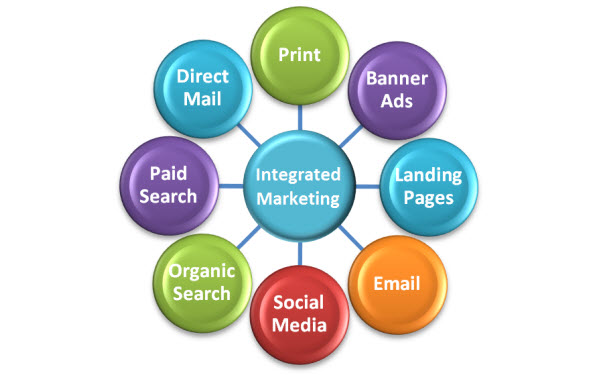
All marketers knows the importance Integrated Marketing Communications (IMC) in our marketing campaigns. It is how our business communicates our message across all marketing channels to deliver a consistent customer experience.
In the past, when we talk about IMC, we focus on traditional media. However, in this digital age, social media has been increasingly gaining importance as a channel to consider for our IMC plan.
According to Coulter and Sarkis, the factors to consider when choosing a media channel for your IMC plan are Quality, Time, Flexibility, Coverage and Cost. Marketers should always take these factors into consideration when crafting their IMC plan.
If you are wondering if you need to include social media in your IMC plan, I have listed some of the pros and cons for you.
The good
If you have been thinking about adding social media to your marketing campaign.. here’s why you should do it!
Ability to adjust marketing plan according to customer’s attitudes and response to the campaign.
Word of mouth – beware though, it is a double edged sword..
These are just some benefits out of many but it’s enough to make marketers excited. Now, how about the cons of social media channel as our communication tool?
The bad
It takes additional resources *time* to evaluate and monitor these channels
Lead Time v.s. Exposure Time: certain channels *like Twitter* takes a short time to create but also has a short exposure time, if consumer miss it they may never see it again!
And here are just some of the cons of social media!
Is is too much to take?
I definitely think the pros outweighs the cons when the channels are handled carefully as there are many proven successful brands on social media. Do you also think that the pros outweighs the cons? Let me know in the comments below!
SEO, or otherwise known as Search Engine Optimization, has been said to be “dead” for years now. But is that really the case? Or should marketers be concerned?
A brief history of SEO
The rise of SEO started in mid-1990s, when people began optimising websites for search engines. With that, came the “White Hat” and “Black Hat” SEO specialists. The Black Hats, are those who used underhand methods such as manipulating keywords density or purchasing backlinks.
The death of SEO
Google was not happy with the deeds of the black hats! Google’s mission is “to organize the world’s information and make it universally accessible and useful.”, with the black hats SEO manipulations, people will not be getting the “most useful” or “most relevant” search results!
It did not take long before Google introduced new algorithms like Panda, Penguin and Hummingbird to stop the black hats methods from working. This was the beginning of what people claim as the “death of SEO“.
SEO has evolved
Is SEO really dead though? Or are these just words of lazy marketers who have failed at SEO? Rather than dying, some says SEO has evolved, and I couldn’t agree more! To provide consumers with the most relevant results, web content, keywords and user experience (UX) are just some of the factors that plays a part in SEO. Failure is any of the factor would have resulted in poor SEO ranking.
The implications..?
The “death of SEO” as they claim – is in fact a good thing for the white hats SEO specialists. It provides a fair competition for marketers who do not have the budget *puchasing backlinks*, or for marketers who are genuinely making effort to provide consumers with the most relevant information and content.
What this means to consumer, is that their search results would be much more accurate to their needs! Who wouldn’t want that?!
It is in no doubt that Google will continuously improve their algorithm to give consumers the best search results. SEO will possibly keep changing and what marketers can do is to keep yourself up to the emerging SEO trends.
So.. Do you still think SEO dead? Share your views in the comments below!
From searching ‘Best restaurant in my area’ at lunch to ‘How to open a wine bottle’ at social events.. I definitely do at least one google search every day. These are what Google call the Micro-Moments. And, what exactly are micro-moments?
Google defines micro-moments as moments where users reflexively turns to their device, usually mobile, to get quick answers or find solutions to a problem.
To give you a better idea, here’s a short video showing the micro-moments in our daily life.
Why Micro-Moments Matters?
Mobile device is forecasted to drive 80% of global internet usage in 2018. Mobile device has become a huge part of consumer’s information search with 78% of mobile searches for local business information resulted in a purchase.
There is an urgency for marketers to understand the micro-moments that occurs for their product, and deliver an accurate answer to user’s problem.
As Google says, brands needs to ‘Be there. Be useful. Be quick.’ in order to be successful in catching consumers in their micro-moments.
With mobile marketing being increasingly crucial to our online success, brands need to understand user’s behaviour when searching for their product. Digital marketers need to optimise their brand for mobile devices by incorporating mobile marketing into their digital strategy.
Thankfully, RedStag Fulfillment has came up with 32 research backed tips to how marketers can optimise mobile marketing in an infographic!
By incorporating these tips to your mobile marketing strategy, it increases the efficiency for consumers looking for solutions online, and hence increases the chance to convert a consumer to a customer. These tips can definitely help marketers increase brand’s visibility on search engine and encourage sharing of brand’s content via mobile device.
With consumers increasingly relying on mobile device to readily find answers on-the-go, marketers should definitely learn the micro-moments and adopt these tips to their strategy. Don’t you agree?
Have you ever wondered why or how content like the Old Spice ad or Gangnam Style music video went viral?
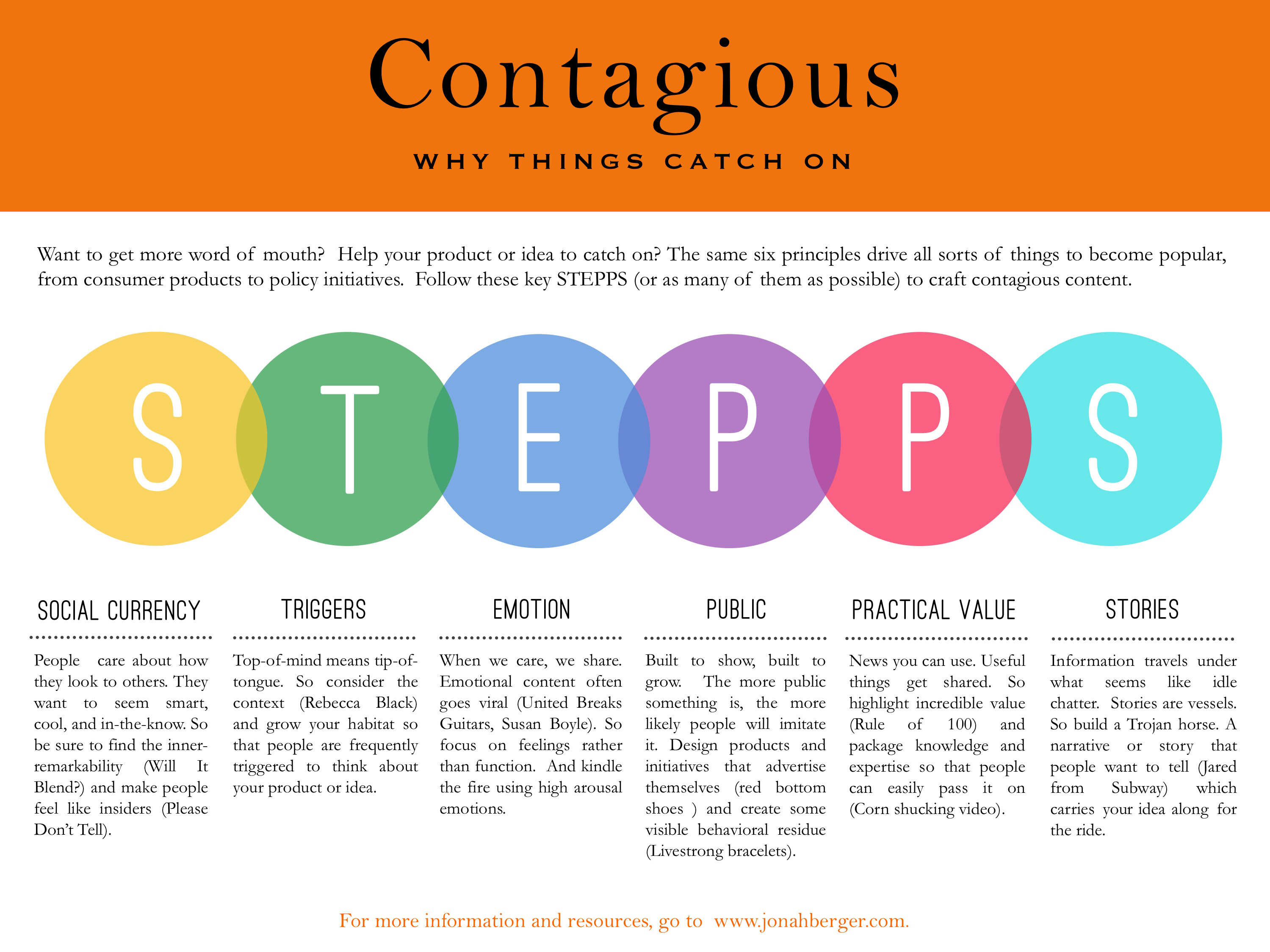
The 6 STEPPS Principle
Jonah Berger, an expert in word of mouth and viral marketing has identified 6 STEPPS to a successful viral marketing in his book Contagious: Why Things Catch On.
How did THIS went viral?!
Now.. let’s look at this video hoax of a marketing campaign for Holiday Mooloolaba that went viral!
One might wonder, how did THIS spread?!
According to Berger’s 6 STEPPS, this video fits the principles of Emotions, Public and Stories. And how so?
In the video, the girl Natalie tells the story of how she met the man of her dream and later lost contact with him but only to find out that she is pregnant 6 weeks later! This “story” was newsworthy to the media outlets as it hits home emotionally and made people sympathise with her. Not only that, the video’s youtube URL was shared on various Facebook community page making it “Public” and easily shared. In a bid to help Natalie find the man, people shared the video leading to its virality!
Campaigns such as the Holiday Mooloolaba video may gain virality, but the public backlash should be taken into consideration. Afterall, is the negative public opinion worth it for the brand as consumers felt cheated?
What about.. The Three Rules?
Berger’s 6 STEPPS definitely highlight how marketers can make it easier for ideas or content to spread. However, in my opinion, there are other factors that marketers should keep in mind when producing a campaign.
Berger’s theory suggests how we can create content that spreads whereas Gladwell’s theory focus more on the environment required for ideas to spread.
For instance, the Law of the Few in Gladwell’s theory, whereby word of mouth through Connectors, Mavens or Salesmen is required for ideas to spread. This is definitely necessary, and in the Holiday Mooloolaba viral video, the news outlet acted as a “connector” to the audiences.
Conclusion
As marketers, both theories from Berger and Gladwell should be considered when we are coming up with ideas for our content. Berger’s theory help us to create content that are relevant to the audience while Gladwell’s theory help us consider the optimal environment for our ideas to spread.
Is there a theory you prefer? Share your comments below!
Are you an aspiring entrepreneur looking to start your very first online business? Or a seasoned entrepreneur looking to bring your business online?
Regardless of your business nature, you should be giving your E-business model a serious thought. With the 84% of Singaporeans being Internet users in 2019, that’s a whopping 4.92 Million potential audience for your e-business! Online business is surely attractive for any entrepreneur. However, the internet is ever-evolving and so is the business model that one can adopt for their business. Not sure where to start? Fret not!
Today, I will share on 6 E-business model by Michael Rappa to help you understand what business model is available for you to adapt to your very own business!
Brokerage Model
A broker acts as a “middle man” that brings buyers and sellers together. They usually charge a fee for each transaction made.
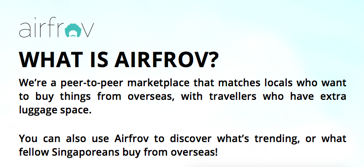
An example of a brokerage model is Airfrov. In this rather unique example, Airfrov works on a brokerage model and acts as a middle man for the buyer and seller in a C2C scenario. It is whereby sellers themselves are a middle man helping the buyers to get the items they want overseas!
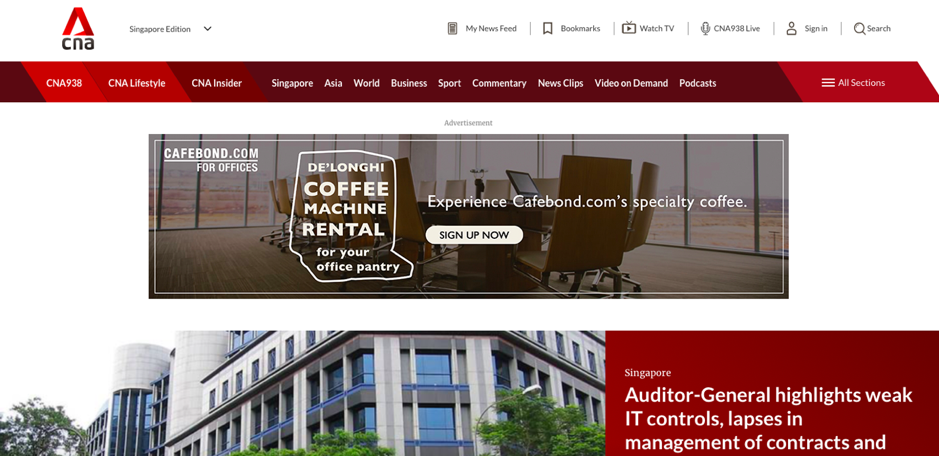
The advertising model is used by traditional media such as websites, blogs or IM that shares content (either self-created or distributed content). This business model usually has high traffic to their websites, and they earn by banners ads displayed next to their content.
An example would be CNA, Channelnewsasia. CNA shares news from Singapore and around the world. On their website, you will find banner ads displayed at the top or side of the page.
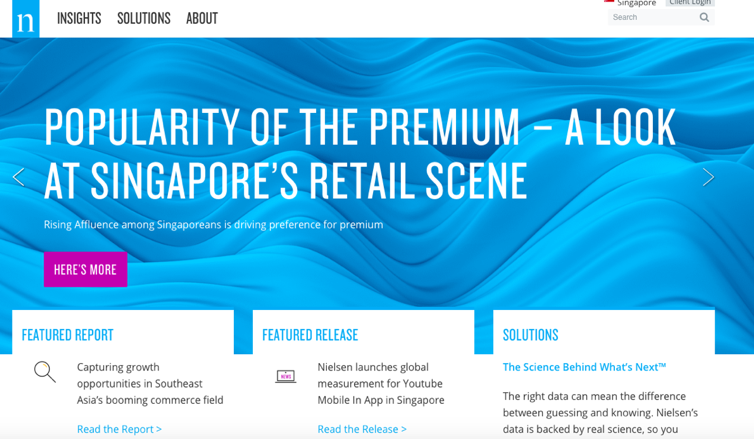
Infomediary stands for Information Intermediaries. A firm on the intermediary model is essentially selling insights from data collected from consumers.
An example of such a business model would be Nielsen, a global data analytics and market research company. Nielsen collects data from consumers, analyze the data and sell the insights gained to businesses who wish to learn more about their target market.
Merchant Model is essentially wholesalers or retailers of goods and services, usually with an existing brick and mortar retail store. Their website is their online presence and having a web front that allows them to sell digitally. Merchant model sales are usually made based on the list price or auction format.
Merchant Model is everywhere! One example is Adidas, who have both physical retail store and an e-store that allows consumers to shop online.
Community Model
Business on the community model is built on loyalty, and consumers often invest time and emotion in such community.
An example of a community model is Wikipedia, where they run by voluntary donations!
As the internet evolves, new e-business models emerge. This is one e-business model you can use!
Freemium
The word “Freemium” comes from “Free” and “Premium”. It means giving your customers a free version to entice them to pay for the “Premium” version.
An example of a Freemium business model would be LinkedIn. LinkedIn users on the free version are allowed to use the main service. However, if they upgrade to a premium account, they can gain access to services that are only available to premium users.
Don’t just hear it from me!
Watch Chris Anderson, the author of “Free: The Future of a Radical Price,” share on how Freemium model benefits businesses in the 21stcentury!
In my opinion, depending on your business nature and needs, there surely is something that appeals to your target customers.
Let me know what you think of these e-business models, or which is your favorite!









 Jamie's Blog